

A homestead exemption could help lower your property taxes. But many homeowners don’t know what it is, whether they qualify, or whether they have already claimed it. In simple terms, a homestead exemption is a property tax benefit. It can lower the taxable value of your home or reduce your tax bill if you qualify. That can make a difference in your annual property tax bill. But there is an important catch: homestead exemptions do not work the same way everywhere. States and local governments set their own rules. The exemption amount, who qualifies, how to apply, and deadlines can all be different. The National Conference of State Legislatures explains that homestead exemptions usually work in one of two ways. They act as a credit against your property taxes, or they exempt part of your home’s value from tax. So if you’re wondering whether a homestead exemption can lower your property taxes, here is where to start: Where is your home located?
Who Qualifies for a Homestead Exemption?
The most common requirement is straightforward: You own the home and use it as your primary residence. However, simply owning a home does not automatically mean you qualify. Depending on your state or county, eligibility may also depend on:
When you owned the property. When you began living there. Whether the home is your legal or primary residence. Whether you claim a homestead exemption somewhere else. Whether you meet a local filing deadline. Whether your ownership information is on record correctly.
For example, Georgia generally requires you to own and live in the property as your legal home. This must be true as of January 1 of the tax year. Texas has a similar rule. To get its general residence homestead exemption, you must own the property and use it as your main home. Because of this, a rental property, vacation home, or investment property usually will not qualify.
Check with your county. Your local assessor, property appraiser, or appraisal district can tell you exactly what counts as a primary residence.
How Does a Homestead Exemption Lower Your Property Tax Bill?
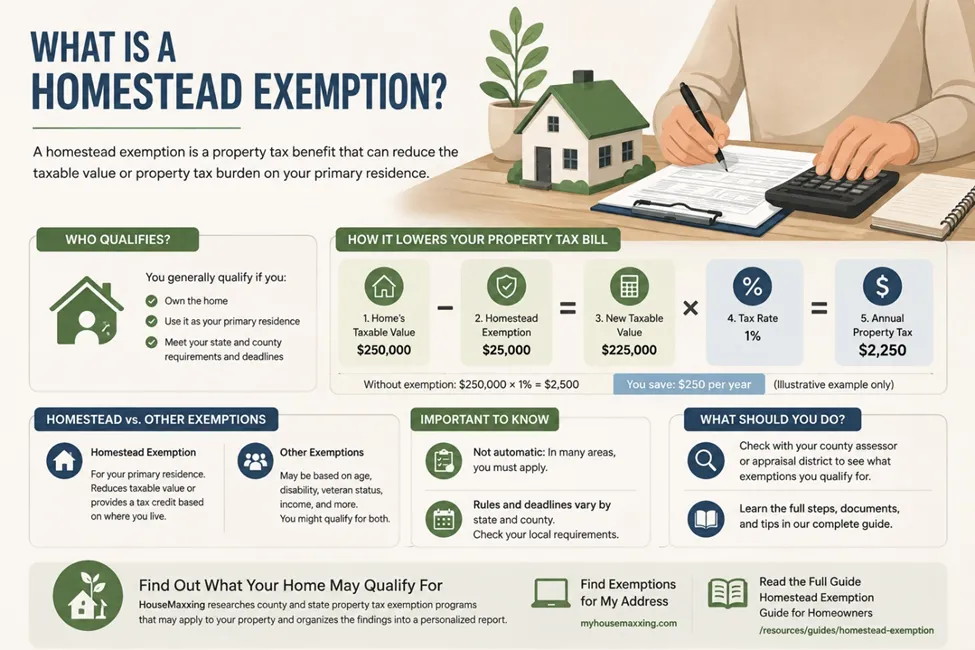
The easiest way to understand a homestead exemption is to look at your taxable value. In a simplified example: Taxable Value × Tax Rate = Property Tax A homestead exemption can lower the taxable value used in that math.
Illustrative Example
Imagine:
Home’s taxable value: $250,000 Homestead exemption: $25,000 Tax rate: 1%
Without the exemption:
$250,000 × 1% = $2,500
With the tax exemption:
$225,000 × 1% = $2,250
In this simplified example, the exemption would reduce the annual property tax by $250. This is illustrative only. It is not a prediction of your savings. Your actual property taxes may involve more than one taxing authority. They may also involve different tax rates, assessment rules, and other exemptions. The International Association of Assessing Officers explains that taxable value is usually the value used to figure your taxes. This is the value left after any exemptions or other adjustments are applied. Some places make the math even more specific. Texas, for example, explains that its residence homestead exemption removes part of a home’s appraised value from taxation. That’s why the exemption amount itself isn’t the same thing as your actual dollar savings.
Homestead Exemption vs. Other Property Tax Exemptions
A homestead exemption is generally tied to your primary residence. Other property tax exemptions may depend on different factors. These can include age, disability, veteran status, income, or other circumstances. Some homeowners may qualify for more than one benefit, depending on their state and county. For example, Texas offers extra residence homestead exemptions for some homeowners. This can include homeowners who are 65 or older, or who have a disability. Pennsylvania also uses a homestead exclusion. It is part of the state’s property tax relief plan for eligible primary residences. So don’t assume the standard homestead benefit is the only program available to you. Your address and circumstances may qualify you for additional property tax savings.
Does Everyone Get a Homestead Exemption Automatically?
No. This is one of the most important things to understand. Some places automatically renew approved exemptions. Others require homeowners to apply again. Texas says property owners generally must apply for exemptions. Applications are handled through the local appraisal district. Georgia also requires homeowners to apply for its homestead exemption. Other states may have automatic benefits or different filing systems. That means you should not assume you are getting every available benefit just because you have lived in your home for years. Check your property tax record to see which exemptions are actually being applied. USAGov recommends checking your state tax agency and local government website to learn about state and local taxes.
How Much Can a Homestead Exemption Save?
There isn’t one nationwide answer. Your potential savings depend on: Your property’s taxable or assessed value. The exemption available in your jurisdiction. Local property tax rates. Which taxing authorities apply the benefit. Whether you qualify for additional exemptions State-specific assessment rules.
For example, Texas requires a school-district residence homestead exemption. It also lets certain local taxing units offer additional exemptions. Pennsylvania’s homestead program works differently. It uses a homestead or farmstead exclusion. This lowers the assessed value before your property tax is calculated.
The point is simple: There is no universal homestead exemption amount. The number that matters is the benefit available to your address.
What Should You Do If You Think You Qualify?
Start with the official property tax authority for the county where your home is located.
Look for: Homestead exemption Property tax exemptions Property assessor Property appraiser Appraisal district Tax assessor
Before you apply, check the eligibility rules, filing deadline, required documents, and exemption amount.
Final Thoughts
A homestead exemption can lower the taxable value of your home or reduce the property tax bill if you qualify. But there is no one-size-fits-all rule. Your state and county decide who qualifies and how the benefit works. They also decide how much it is worth, whether you need to apply, and what happens if your situation changes. The good news is that you don’t have to guess. If you own and live in your home, checking what your address qualifies for is a smart place to start. Could Your Home Qualify for a Homestead Exemption? Now you know what a homestead exemption is. The next step is finding out whether your address qualifies. HouseMaxxing researches county and state property tax exemption programs that may apply to your property. Then it organizes the findings into a personalized report, usually in about 30 seconds. You stay in control of filing any applications. And if nothing is found beyond the standard homestead exemption, you don’t pay. Want to make sure you’re not leaving your homestead exemption on the table? Use our free address check now.






 Ask ChatGPT
  Ask Claude
  Ask Perplexity